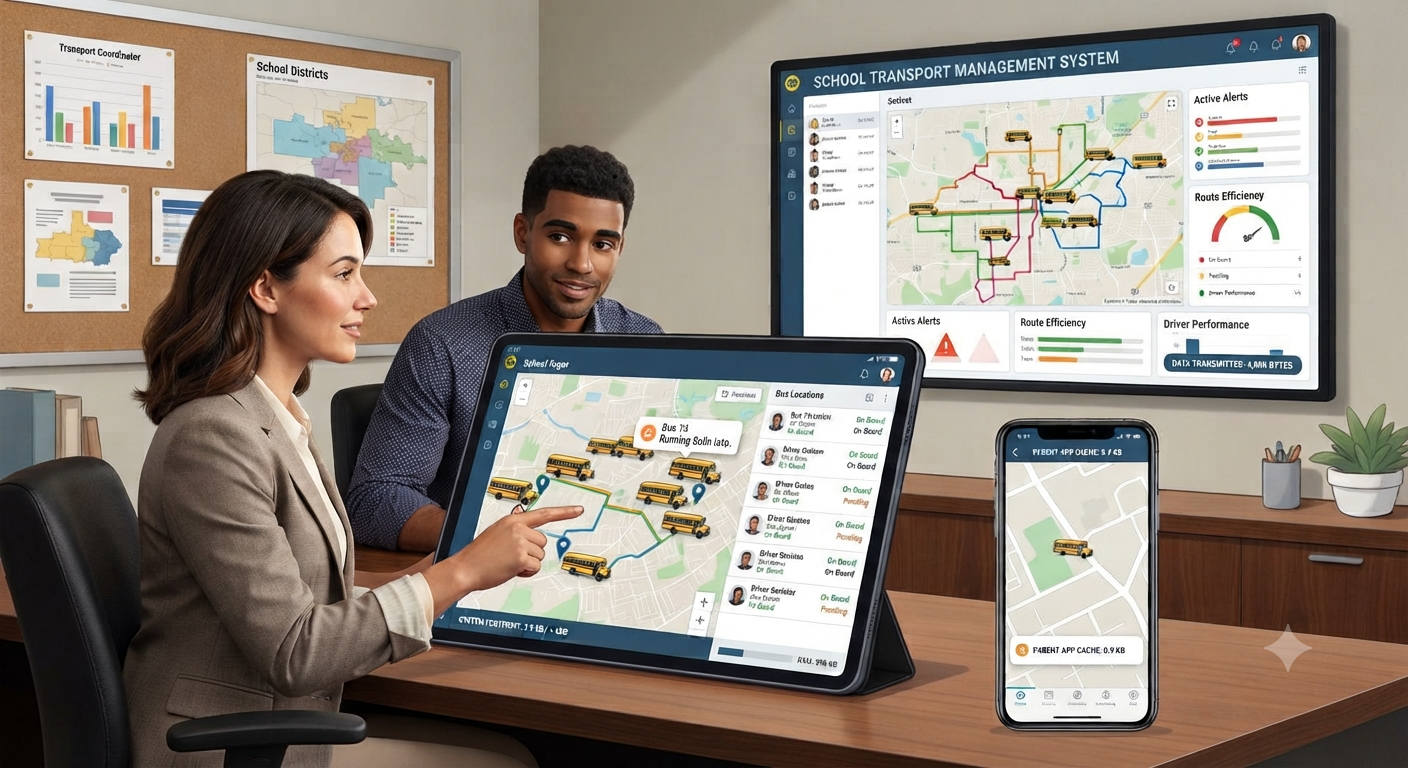
Student safety is one of the biggest responsibilities for every school. While schools focus on providing quality education inside the classroom, ensuring students travel safely between home and school is equally important.
Traditional school transport systems often depend on manual registers, phone calls, and basic communication between drivers, transport coordinators, parents, and school administrators. These methods can make it difficult to know the exact location of a school bus or respond quickly when an unexpected situation occurs.
This is where school transport management software with GPS tracking can make a significant difference.
GPS-enabled school transport software allows schools and parents to monitor buses in real time, track routes, receive alerts, manage drivers, and improve communication. By bringing transportation information into one digital system, schools can create a more organized and transparent transportation process.
In this blog, let's understand how GPS tracking works and how it can improve student safety.
Table of Contents
- What Is School Transport Management Software?
- Why Student Transportation Needs Better Management
- What Is GPS Tracking in School Transport?
- How GPS Tracking Improves Student Safety
- Key Features of School Transport Management Software
- Benefits for Schools
- Benefits for Parents
- Benefits for Students
- How GPS Tracking Helps During Emergencies
- How Schools Can Implement Transport Management Software
- Future of School Transportation Management
- Conclusion
- Frequently Asked Questions
1. What Is School Transport Management Software?
School Transport Management Software is a digital solution designed to help schools manage their transportation operations efficiently.
It can bring different transportation activities into a single platform, including:
- Bus and vehicle management
- Driver management
- Student transportation records
- Route planning
- GPS vehicle tracking
- Pickup and drop-off information
- Parent notifications
- Bus attendance
- Emergency alerts
- Transport reports
Instead of relying entirely on spreadsheets, registers, and phone calls, school administrators can use centralized software to monitor and manage transportation activities.
2. Why Student Transportation Needs Better Management
School transportation involves multiple people and moving parts. School administrators need to coordinate drivers, buses, routes, students, and parents every day.
Some common challenges include:
- Difficulty tracking buses in real time
- Delays caused by traffic or route changes
- Limited communication with parents
- Manual transport records
- Difficulty monitoring routes
- Lack of immediate information during emergencies
- Challenges in managing multiple school buses
These challenges can affect both operational efficiency and the overall transportation experience.
A school bus tracking system can help schools address many of these issues by providing real-time transportation information.
3. What Is GPS Tracking in School Transport?
GPS, or Global Positioning System, uses satellite-based location technology to determine the location of a vehicle.
When GPS tracking is integrated into school transport software, the school can monitor the location of its buses through a digital dashboard or application.
Depending on the system, administrators and authorized users may be able to see:
Bus → Current Location → Route → Speed → Estimated Arrival → Alerts
This gives schools better visibility into their transportation operations.
Parents can also receive relevant notifications, such as when a bus is approaching a pickup location, depending on the software's available features and school policies.
4. How GPS Tracking Improves Student Safety
4.1 Real-Time Bus Location
One of the biggest advantages of GPS-enabled transport software is real-time vehicle tracking.
School administrators can view where buses are located during their journey. This can help them identify unexpected delays, route deviations, or other transportation issues more quickly.
4.2 Route Monitoring
GPS tracking allows schools to compare a bus's current location with its planned route.
If a vehicle moves away from the designated route, administrators can investigate the situation and contact the driver when necessary.
This provides an additional layer of transportation monitoring.
4.3 Faster Emergency Response
Unexpected situations can occur during transportation, including vehicle breakdowns, accidents, traffic problems, or medical emergencies.
GPS tracking can provide the school's transport team with the vehicle's latest location, helping them coordinate an appropriate response more efficiently.
Having accurate location information can be particularly useful when communicating with emergency services or school staff.
4.4 Parent Notifications
Parents often want to know whether their child's school bus is running on schedule.
A transport management system can provide notifications about:
- Bus departure
- Bus arrival
- Delays
- Route changes
- Pickup and drop-off events
- Emergency situations
Better communication can reduce uncertainty for parents and improve trust in the school's transportation system.
4.5 Monitoring Driving Behaviour
Some advanced school transport solutions can record information such as vehicle speed and driving patterns.
Schools can use this information to identify potentially unsafe driving behaviour and provide appropriate feedback or training to drivers.
However, GPS tracking should be used as part of a broader driver-safety program rather than as the only safety measure.
4.6 Better Pickup and Drop-Off Management
Managing student pickup and drop-off manually can become difficult when a school has many students and multiple routes.
Transport software can organize student information according to:
- Bus number
- Route
- Pickup point
- Drop-off point
- Assigned driver
- Student details
This helps transportation staff maintain more organized records.
5. Key Features of School Transport Management Software
A comprehensive school transportation management system may include the following features:
| Feature | Purpose |
|---|---|
| GPS Tracking | Monitor buses in real time |
| Route Management | Plan and manage transportation routes |
| Driver Management | Maintain driver information and assignments |
| Student Management | Organize student transport details |
| Parent Notifications | Keep parents informed about bus movements |
| Attendance Tracking | Track transportation attendance |
| Emergency Alerts | Communicate important incidents quickly |
| Reports | Analyze transportation operations |
| Mobile App | Provide convenient access to transport information |
| Dashboard | Manage transportation activities from one place |
The exact features can vary depending on the software provider and the school's requirements.
6. Benefits for Schools
School administrators can benefit from transport management software in several ways.
Centralized Information
Instead of maintaining transportation information across multiple spreadsheets and registers, schools can manage important data through one system.
Improved Visibility
GPS tracking provides administrators with better visibility into bus locations and routes.
Efficient Route Management
Digital route planning can help schools organize transportation routes more systematically.
Better Communication
Schools can communicate transportation updates to parents more efficiently through automated notifications.
Useful Reports
Transport reports can help administrators review routes, schedules, vehicle activity, and other operational information.
7. Benefits for Parents
Parents play an important role in student transportation safety.
With a GPS-enabled school bus tracking software, parents may be able to:
- View the bus location
- Receive arrival notifications
- Know about transportation delays
- Receive important alerts
- Get better visibility into their child's bus journey
Instead of repeatedly calling the school to ask about a bus, parents can receive relevant information through the designated transport system.
8. Benefits for Students
The primary goal of school transportation management is to support safe and organized student travel.
A well-managed transportation system can provide students with:
- Organized pickup and drop-off
- Properly assigned routes
- Better transportation coordination
- Reduced confusion
- Faster response during unexpected situations
GPS tracking does not replace responsible drivers, trained staff, or school safety procedures. Instead, it acts as an additional technology layer that supports them.
9. How GPS Tracking Helps During Emergencies
Consider a situation where a school bus experiences an unexpected breakdown.
With a traditional system, parents may need to call the school, while school staff may need to contact the driver to determine the vehicle's location.
With GPS-enabled transport software, authorized school staff can quickly check the bus's latest location and coordinate the next steps.
For example:
Bus Problem → GPS Location Identified → Transport Team Notified → Parents Updated → Assistance Coordinated
This can make communication more structured during unexpected situations.
10. How Schools Can Implement Transport Management Software
Schools should carefully evaluate their transportation requirements before selecting a system.
Step 1: Identify Transportation Requirements
Determine the number of buses, students, routes, drivers, and pickup locations.
Step 2: Select Suitable Software
Look for software that provides the features required by the school, such as GPS tracking, route management, notifications, and reporting.
Step 3: Install GPS Devices
GPS tracking devices can be installed in school buses according to the system's technical requirements.
Step 4: Add Transportation Data
Student, driver, vehicle, and route information can be configured within the software.
Step 5: Train Staff and Drivers
Transport coordinators and relevant staff should understand how to use the system effectively.
Step 6: Communicate With Parents
Schools should clearly explain how parents can access transportation information and notifications.
Step 7: Monitor and Improve
Schools can regularly review transport data and feedback to improve routes, schedules, and safety procedures.
11. Future of School Transportation Management
School transportation is becoming increasingly digital.
Future transportation systems may combine:
- GPS tracking
- Mobile applications
- Digital attendance
- Automated notifications
- Route optimization
- Data analytics
- Driver monitoring
- Emergency communication
- Smart vehicle technologies
As schools adopt more digital solutions, school transport management software can become an important component of a connected school management ecosystem.
12. Conclusion
Student transportation is an important part of school operations, and safety should remain a major priority.
GPS-enabled school transport management software provides schools with better visibility into bus locations, routes, and transportation activities. It can also improve communication between schools, drivers, and parents.
From real-time bus tracking to route monitoring and emergency communication, GPS technology can support schools in creating a more organized and transparent transportation process.
However, technology should complement—not replace—trained drivers, proper safety procedures, regular vehicle maintenance, and responsible school transportation policies.
For schools looking to modernize their transportation operations, implementing a reliable school transport management system with GPS tracking can be an important step toward better-managed student transportation.
Frequently Asked Questions
1. What is school transport management software?
School transport management software is a digital system that helps schools manage buses, routes, drivers, students, transportation records, GPS tracking, and parent communication.
2. How does GPS tracking improve school bus safety?
GPS tracking provides real-time or near-real-time information about bus locations and can help schools monitor routes, identify delays, and coordinate responses to unexpected situations.
3. Can parents track school buses?
Depending on the software and the school's configuration, parents may be able to view bus locations and receive transportation notifications through a mobile application or other communication system.
4. Can GPS tracking help during emergencies?
Yes. GPS information can help authorized school staff identify the bus's location and coordinate communication and assistance during transportation emergencies.
5. Is GPS tracking enough to ensure student safety?
No. GPS tracking is a technology tool. Student safety also depends on trained drivers, vehicle maintenance, proper routes, supervision, emergency procedures, and school transportation policies.
6. What should schools look for in transport management software?
Schools can consider GPS tracking, route management, driver management, student records, parent notifications, attendance, emergency alerts, reporting, mobile access, and data security.